
Foundation warning signs in Austin homes: what is normal and what is not
By Timothy Moose, Managing Editor · Updated 2026-10-16
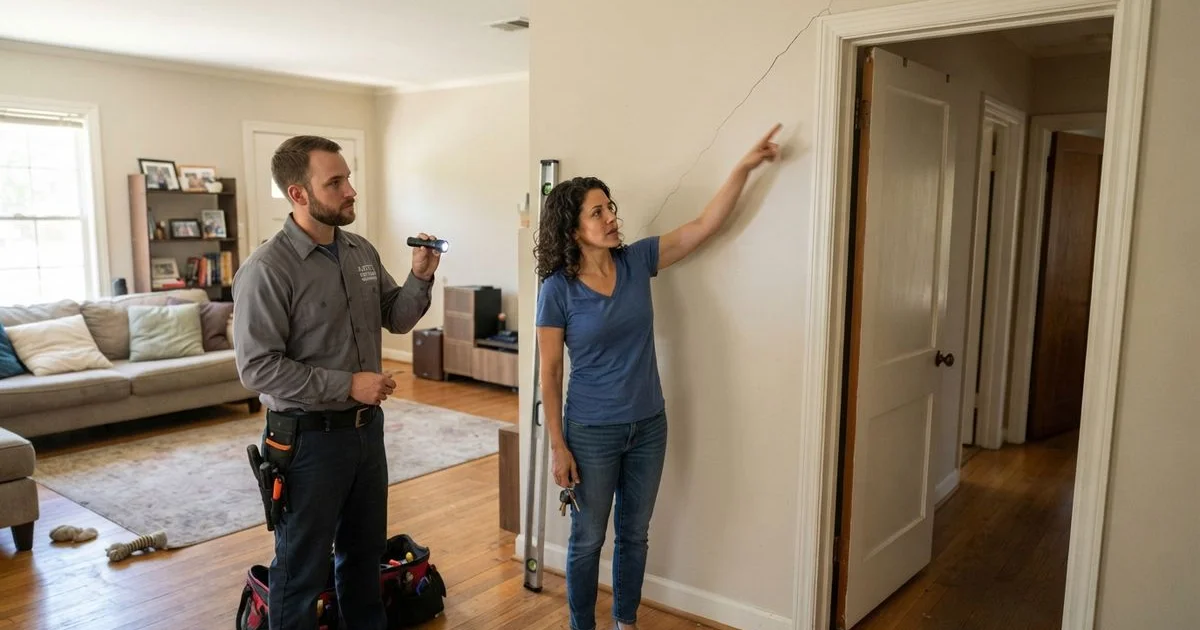
Every house in Central Texas moves a little. The clay soil swells when it is wet and shrinks when it dries, and a slab or pier system rides along with it. The question is whether the movement is within normal range or has started to damage the structure. This is general information, not engineering advice.
Signs that are usually minor
- Hairline cracks in drywall near corners or door frames
- Thin, stable cracks in a garage slab
- Small gaps that open in dry months and close after rain
Mark the end of a crack with a pencil and a date. If it has not grown in a few months, it is probably cosmetic.
Signs worth an inspection
| Sign | What it can suggest |
|---|---|
| Doors and windows that stick or no longer latch | Frame racking from movement |
| Stair-step cracks in brick | Differential movement at the wall |
| Floors that slope or feel bouncy | Settlement or beam problems |
| Gaps between wall and ceiling or floor | Structure shifting |
| Cracks wider than a coin edge, or growing | Active movement |
| Cracked tile or popped floor covering over one area | Slab heave or settlement |
Differential settlement, where one part of the house drops more than another, is the pattern that most often leads to repair. The glossary has a short definition if you want the term.
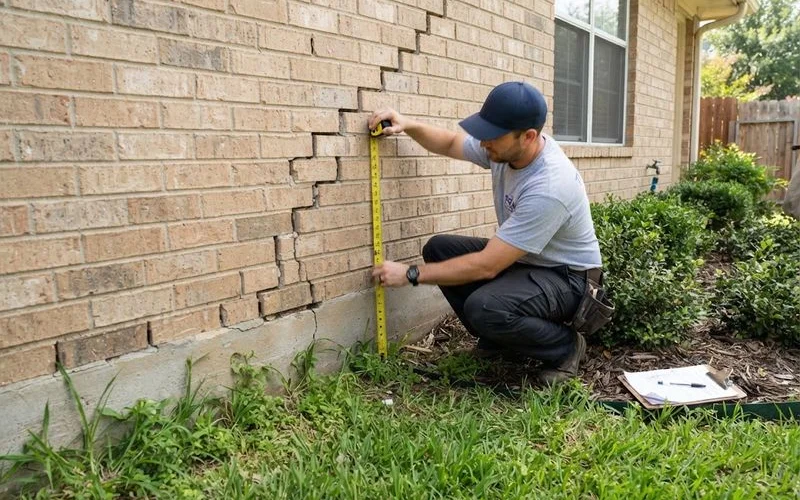
Water is often the story
In our review data, drainage and water problems appear alongside foundation work regularly. Gutters that dump at the wall, bare soil sloping toward the house or a leaking pipe under the slab can cause or worsen movement. Check those before you assume the soil alone is to blame.
Reading the pattern, not the single crack
One crack tells you little. A pattern tells you more. If the cracks cluster at one corner, the doors in that same area stick and the floor slopes toward that spot, you are probably looking at movement concentrated there. If cracks are scattered with no other signs, they may simply be shrinkage.
Direction helps too. Horizontal cracks in a basement or retaining-style wall can point to pressure from soil and water. Vertical hairlines in a poured slab are often just curing and thermal movement.
What not to do
Do not fill and paint over a crack and consider the problem solved, because you lose the ability to see whether it moves. Do not wait for several seasons while a wide crack grows. And do not accept a diagnosis from a person who has not looked at the house.
Safety note
Structural movement is rarely an emergency, but sudden large changes, such as a floor dropping noticeably or a wall bowing, deserve a same-week call to a professional. If you smell gas or see severe damage after a storm or plumbing failure, leave the area and contact the appropriate emergency service.
What to do next
- Photograph and date everything.
- Track cracks for a few weeks.
- Get an independent look: an engineer’s report, or inspections from more than one company.
- Fix water sources before or with the structural repair.
Reviewers highlight inspections that were thorough and honest, and complain when findings were disputed later. Ask for the findings in writing. Damp crawl spaces can mimic or worsen foundation movement, and the crawl space moisture guide explains how to tell. You can read how we evaluate companies in how we score and browse the whole directory from the home page.
Frequently asked questions
- Are all cracks a foundation problem?
- No. Hairline drywall or stucco cracks are common as materials shrink. Wide, growing or stair-step cracks deserve a professional look.
- What are the first signs of foundation movement?
- Sticking doors and windows, new gaps at trim, sloping floors and cracks that keep widening.
- Should I call a foundation company or an engineer first?
- An independent engineer gives a report with no repair to sell. A company inspection is often free. Many owners do one or both.
- Can I wait?
- Small, stable cracks can be monitored. Fast-growing or structural ones should not sit for long.