
Mudjacking vs foam leveling: which method fits your slab or driveway
By Timothy Moose, Managing Editor · Updated 2026-10-27
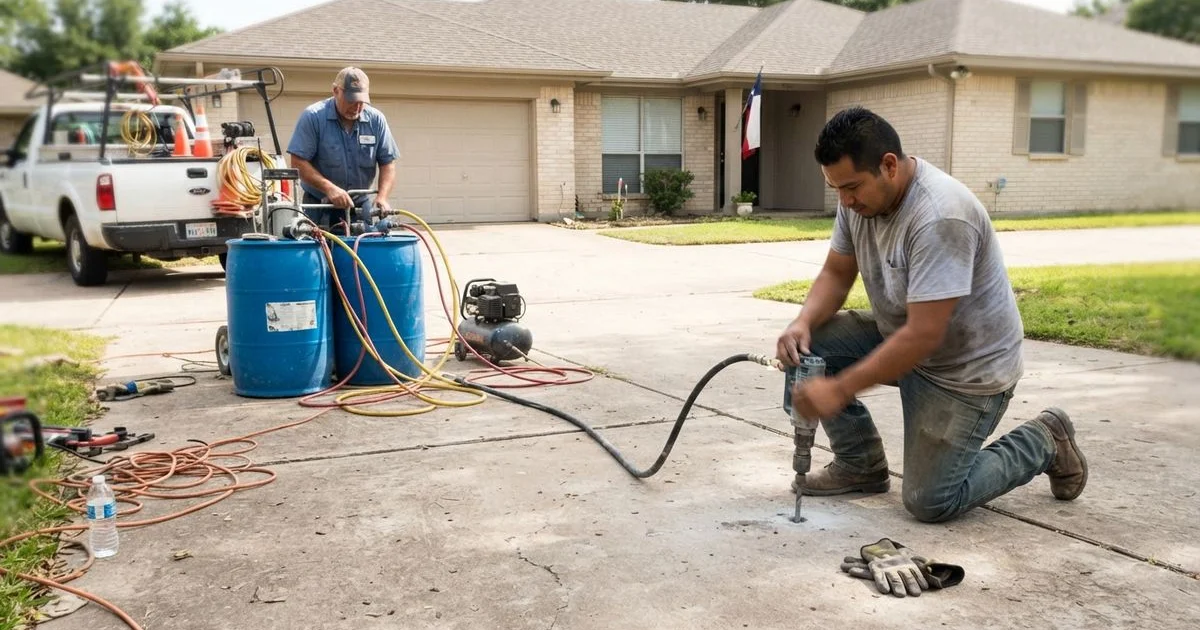
When a driveway, patio or garage slab sinks, replacing it is the expensive option. Two lifting methods are often offered instead: mudjacking and polyurethane foam leveling. They are close cousins with different trade-offs. You can find local companies in the concrete leveling and mudjacking category.
How they differ
| Mudjacking | Foam leveling | |
|---|---|---|
| Material | Cement and soil slurry | Expanding polyurethane foam |
| Hole size | Larger | Smaller |
| Weight added | Heavier | Lighter |
| Usual price | Often lower | Often higher |
| Cure time | Longer | Shorter |
| Best on | Large, thick slabs | Weak soil, where added weight is a concern |
Check the glossary entries for each if you need the definitions. The practical point is that the filler goes in through holes drilled in the slab and pushes it back up.
When each makes sense
Mudjacking suits big driveways and patios on stable soil where cost is the priority.
Foam suits slabs over soft or poor soil, or areas where you want minimal disruption and fast return to use.
Neither is the answer if the slab is badly cracked or broken, in which case replacement can be the better value.
The question that matters most
Why did the slab sink? Voids from erosion, poor drainage, or a leaking pipe all cause it. In our reviews, one complaint is a past leveling job that needed a costly redo. Lifting a slab without addressing the water leaves you with a repeat problem.
Cost
Our concrete leveling estimator models cost by area and severity, and real quotes vary. Get written quotes that state the area, the method and the guaranteed level.
What the job looks like
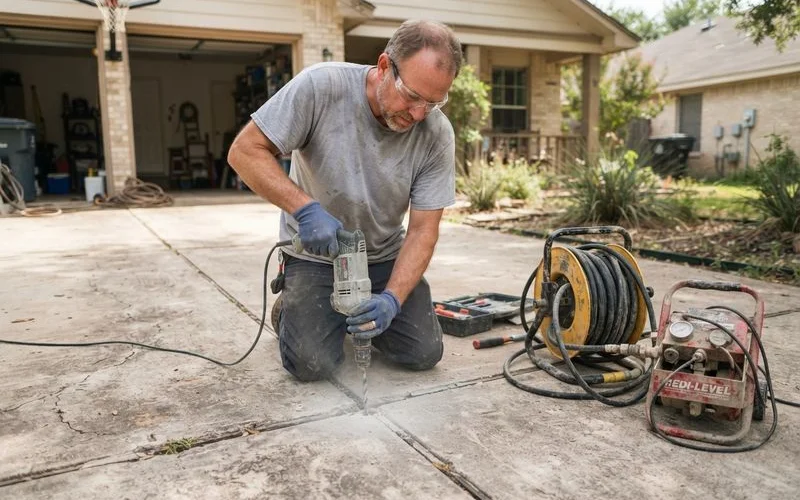
A crew drills holes, usually a few inches wide for mudjacking and smaller for foam, then pumps material under the slab while watching the lift. The work for a typical driveway can be done in a day, and holes are patched after. Ask whether patches will be color-matched, since they will show.
Preparing the site
Move vehicles, clear furniture from patios and mark sprinkler lines. Tell the crew about any buried utilities you know of. For garage floors, clear the space so the crew can reach the edges.
Where lifting reaches its limit
If the slab is cracked into pieces, if the soil beneath keeps washing out or if the slab sank more than a few inches, lifting may only buy a short time. Ask the company honestly whether replacement would last longer. Some will tell you. That kind of candor is the honest-assessment trait reviewers praise.
Comparing quotes
Make sure each quote lists the square footage, the method, the number of holes and the warranty. A lower price for a smaller scope is not a better price.
Questions to ask
- How will you determine why the slab settled?
- What is the warranty, and does it cover re-settlement?
- How will you finish the drill holes?
- Can I see before and after measurements from similar jobs?
See how we score for how we evaluate companies, and the home page to browse everything. This is general information, not engineering advice.
Frequently asked questions
- Is foam better than mudjacking?
- Neither wins everywhere. Foam is lighter and uses smaller holes. Mudjacking uses a heavier slurry and is often priced lower. Soil and slab size decide.
- Can either fix a house foundation?
- They are mostly used on flatwork like driveways and patios. House foundations usually need piers.
- Will the slab sink again?
- It can if the soil problem or water source is not fixed. Ask about the cause.
- How long before I can use the surface?
- Many are usable soon after, but ask for the specific cure time.
Related on this site
- Browse concrete leveling & mudjacking providers
- Slab foundation repair methods compared: pressed, steel and drilled piers
- Do you need a structural engineer report before foundation repair?
- Pier and beam foundation repair: what to expect from start to finish
- How poor drainage moves your foundation and what fixes it
- All guides →